
How to introduce a rescue dog to kids: a step-by-step guide
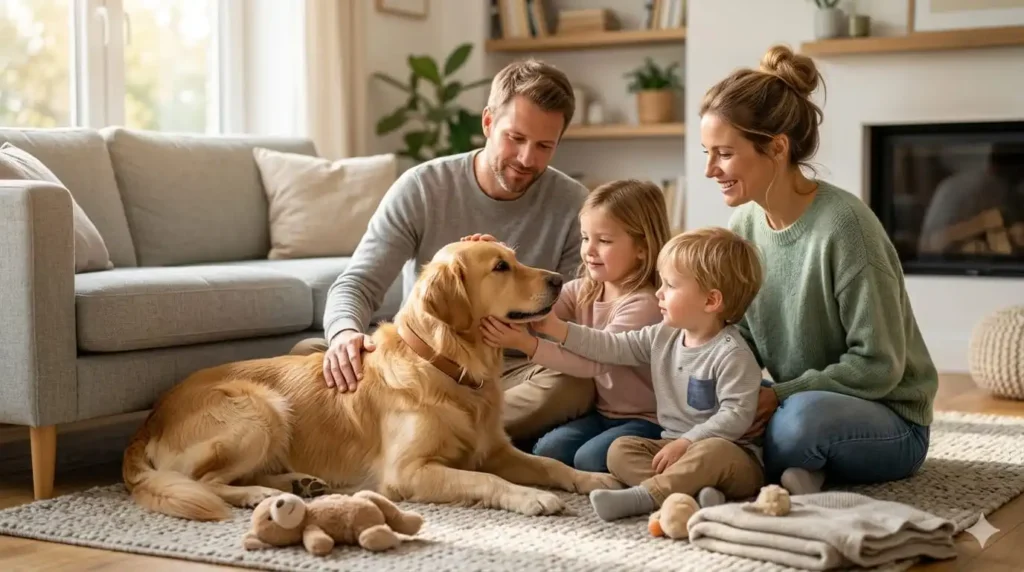
Bringing a rescue dog home when you have kids is one of the most rewarding things a family can do — and one of the most important to get right. Done well, it creates a bond that shapes children for life. Done poorly, it leads to fear, injury, or a heartbroken family returning a dog to the rescue organization.
At Paws Unleashed, a nonprofit dog rescue in Fort Pierce, Florida, we’ve placed rescued and rehabilitated dogs with families of all sizes and ages. We’ve seen what works and what doesn’t. This guide walks you through every stage — from choosing the right rescue dog to the first weeks at home — so your introduction goes smoothly and safely.
Start before the rescue dog comes home
Before bringing the dog home, ask the rescue team what they know about the dog around children. Discuss any concerns and agree on a supervised introduction plan.
Explain that the dog may need quiet and space in a new home. An unknown history does not tell you how the dog will behave. Watch the individual dog and follow the rescue team’s guidance.
Set house rules before day one:
- No running or screaming around the dog until they settle in
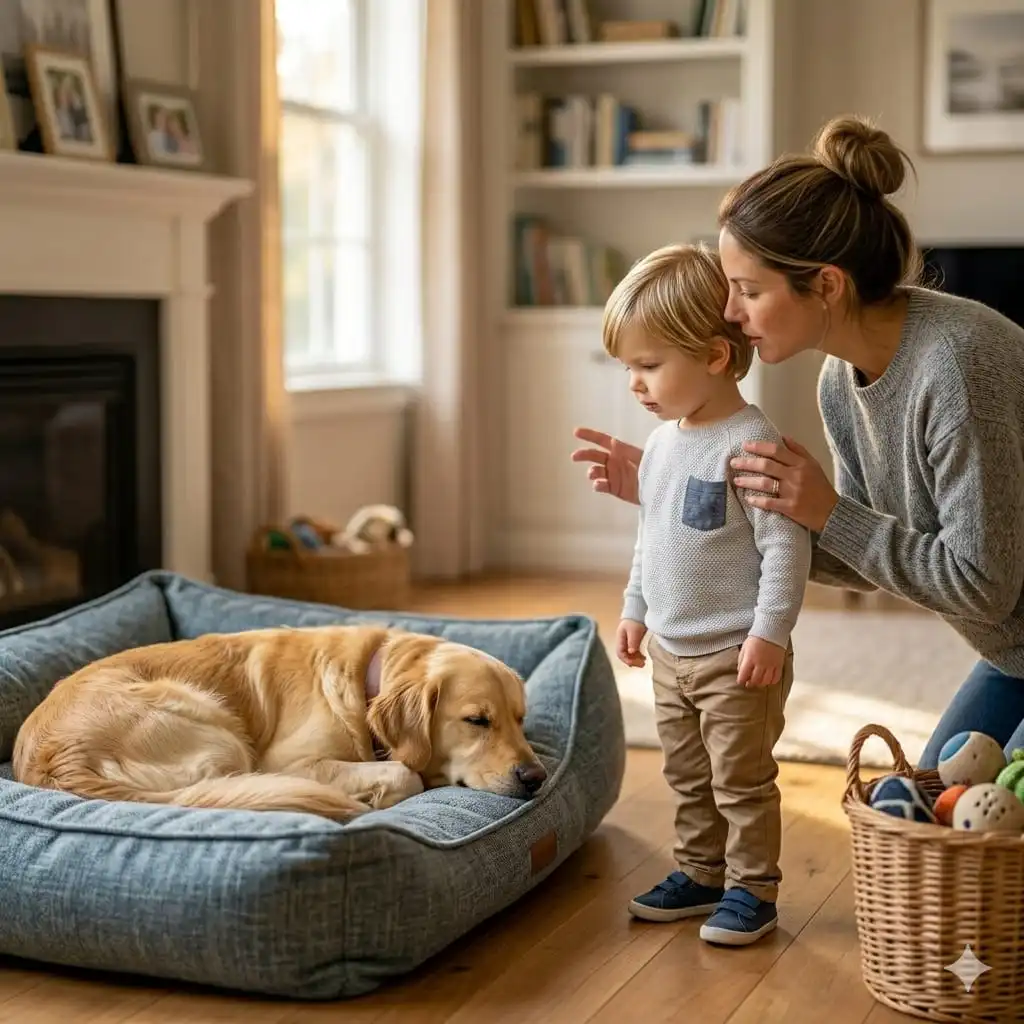
- No approaching the dog when they’re eating or sleeping
- No pulling ears, tails, or trying to sit on the dog
- Always ask an adult before approaching the dog in a new situation
With younger children, make this concrete and fun. Role-play how to greet a dog calmly. Practice ‘tree’ — standing still with arms crossed if a dog jumps. These are skills that protect kids and make rescue dogs feel safer.
The first meeting: slow, calm, and on neutral ground
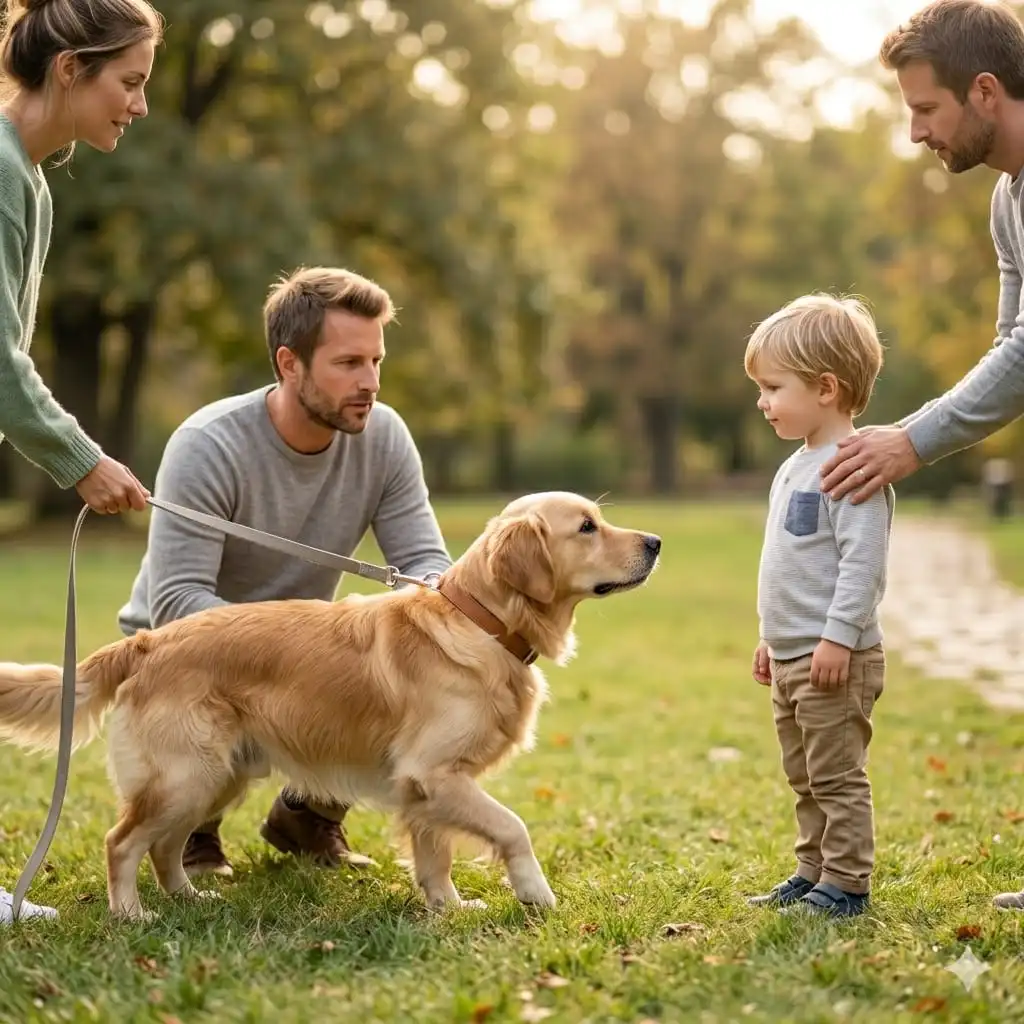
Whenever possible, the first meeting between the rescue dog and the kids should happen before the dog comes home — or at minimum, outside the house before going inside.
Use a quiet setting with room for the dog to move away. Avoid a crowd of excited children. Ask the handler to end the meeting if the dog becomes uncomfortable.
How to do the first meeting:
- Keep the rescue dog on a leash with an adult in control
- Have children stand still and let the dog approach them — never the other way around
- Keep children’s hands to themselves while the dog chooses whether to approach
- Ask the adult handler whether brief petting is appropriate; sniffing alone is not permission to touch
- If the dog moves away or turns away, respect it — don’t force interaction
Watch the dog’s body language carefully. A relaxed rescue dog will have a loose body, soft eyes, and a neutral or wagging tail. A stressed dog will have a stiff body, tucked tail, or will actively try to create distance. Stress signals are not signs of a bad dog — they’re communication that needs to be respected.
The first week: give the rescue dog an anchor
Keep the first week quiet while everyone gets acquainted. Give the dog a resting area that children cannot enter or disturb.
This serves two purposes. It gives the dog a retreat where they can relax without being overwhelmed. And it teaches children from the start that the rescue dog has boundaries that must be respected — a lesson that prevents incidents.
An attentive adult must supervise every interaction between the dog and young children, beyond the first week as well. If the adult cannot watch and intervene, separate them with a secure barrier. Keep early sessions short and let the dog choose whether to approach.
Reduce noise and busy visits during the first few days. A quiet routine gives you a better chance to notice what helps the dog relax.
Teaching kids and dogs how to read each other
Any dog can bite, including a familiar family pet. Children cannot be expected to recognize every warning. Adults are responsible for supervising, protecting the dog’s space, and separating everyone before an interaction becomes unsafe.
Teach your kids these warning signals:
- Growling — never punish a growl; it’s a warning that something is wrong
- Stiff body or tail held high and rigid
- Lips pulled back, even slightly
- Looking away repeatedly or trying to leave
- Freezing in place
If they see any of these, the instruction is simple: stop, stand still, and call an adult.
Keep watching body language as the dog settles in. Familiarity does not remove the need for supervision or a place to rest undisturbed.
Building a lasting bond safely
Add shared activities when the dog seems comfortable, rather than after a fixed number of weeks. Choose activities that suit the dog and the child, with an adult managing safety.
- Children can measure food away from the dog; an adult should place the bowl and keep children away while the dog eats
- Short training sessions with kids: with supervision, even young children can practice ‘sit’ and reward the dog — rescue dogs learn that kids predict good things
- Walks together: a calm family walk is one of the best bonding activities. An adult should keep control of the leash; children can walk alongside.
- Structured games: fetch, hide-and-seek with treats, or ‘find it’ games are mentally stimulating and fun for both rescue dogs and kids
Keep sessions short. Pause when the dog turns away, freezes, tries to leave, or seems uncomfortable. Yawning can have several meanings, so consider the whole interaction rather than treating one movement as proof of fatigue.
When to ask for professional support
Even with a well-matched adoption and careful introduction, some families hit bumps. A rescue dog that was calm at the shelter may be more reactive at home. A behavior may appear that wasn’t present before. A child may have trouble following the rules.
None of this means the adoption is a failure. It means you need more information.
At Paws Unleashed, we support our adopters through the transition. Our rescue dogs receive professional training before placement, and our team is available to help troubleshoot when things feel difficult. A phone call early — before a problem becomes a pattern — makes an enormous difference.
If interactions remain tense, separate the dog and children and ask for qualified help. Do not wait for a recovery deadline or assume a problem will disappear as the dog settles in.
A family adoption works best when the dog’s needs and the children’s safety guide daily decisions. Quiet routines and adult supervision give everyone room to get acquainted.
Ready to find the right rescue dog for your family? Contact Paws Unleashed at (772) 489-1157 or PawsUnleashed.org. We’ll help you every step of the way.
Recent Posts
-
 Rescue Dog Digging in the Yard? Secure the Boundary, Then Find the Reason
-
 Rescue Dog Barking at the Window? Change the Room Before the Cue
-
 Recall Training for a Rescue Dog: Make the Whole Return Worthwhile
-
 Applying to Adopt a High-Drive Rescue Dog: Build an Honest Handler Plan
-
 Trigger Stacking in Rescue Dogs: Plan Recovery Before the Next Demand
Search Posts
Recent Posts
-
Rescue Dog Digging in the Yard? Secure the Boundary, Then Find the Reason
-
Rescue Dog Barking at the Window? Change the Room Before the Cue
-
Recall Training for a Rescue Dog: Make the Whole Return Worthwhile
-
Applying to Adopt a High-Drive Rescue Dog: Build an Honest Handler Plan
-
Trigger Stacking in Rescue Dogs: Plan Recovery Before the Next Demand
2 Responses